
Imagine two scenes placed side by side. In the first, a camera holds a steady view of a table. Hands enter the frame, move a few objects and withdraw. In the second, a bright set of illustrated reels fills the screen. Symbols move through a compact space, then settle into a fresh arrangement. Both scenes invite attention, but they give that attention somewhere different to rest.
SpinRio’s published description includes live casino and slots. That pairing provides the starting point for this feature. The scenes here are general illustrations of those visual forms, not accounts of a SpinRio session. One takes its character from people, surfaces and a continuous camera view. The other can build an entire world from symbols, colour and a small rectangular stage.
A camera gives the table a frame
A table scene contains more information than its central objects. Light catches an edge of cloth. A sleeve briefly crosses the background. A hand pauses while the rest of the picture stays still. The frame gathers these details into one place. Even a restrained view can feel occupied because the person at the table shares the same visible space as the cards or wheel.
The quality of stillness matters here. A camera can remain in position while small events change the scene. The viewer becomes familiar with a corner of the table and notices when something moves across it. The attraction is partly observational. It resembles watching a craftsperson work at a bench: ordinary gestures become easier to see when the setting around them stays consistent.
The interval between visible moments
A shared table view also gives the space between actions a shape. There can be a pause before a hand moves, followed by another pause after it leaves the frame. Those intervals belong to the scene. A raised eyebrow or a glance towards the centre may draw attention without a large visual change. Human presence makes room for details that an illustrated screen would have to deliberately animate.
In our imagined table scene, the camera remains fixed while a few cards are gathered together. The gesture is brief. Its beginning and end are easy to recognise, and the cleared patch of cloth becomes noticeable afterwards. Nothing in that description depends on the outcome of a game. It is an observation about how a person and an object can give a picture a sense of time.
Reels can invent their own setting
A reel scene has a different freedom. It can place a gem beside a letter, a character beside a painted landscape, or a familiar object inside a world that could never fit on a real tabletop. The symbols share a frame, so the artwork has to help them belong together. Colour, outlines and repeated shapes create that connection across a crowded picture.
SpinRio’s original catalogue includes covers named Cash Bandits 3, Gemtopia, Plentiful Treasure and Icy Hot multi-game. Their titles already suggest different visual stories. A bandit character points towards comic adventure; a gem name towards colour and sparkle; treasure towards abundance; hot and icy imagery towards a strong contrast in temperature. These are readings of the preserved cover identities, rather than claims about their rules or results.
Small stages and large personalities
A compact illustrated stage can carry an outsized personality. A character’s face might occupy almost as much space as the surrounding landscape. A title may curve over the scene in lettering that would look enormous on a physical object. This exaggerated scale helps an image announce its theme quickly. It gives the viewer a first impression before the finer details become visible.
The same principle appears in a book cover or a theatre poster. A handful of strong shapes has to suggest a larger story. Reel artwork often works within that kind of concentrated frame. A repeated colour connects the symbols, while one unusual face or object becomes the feature that the viewer remembers. The scene can feel busy, playful or theatrical even when it occupies a modest area.
Blue cloth and coloured light
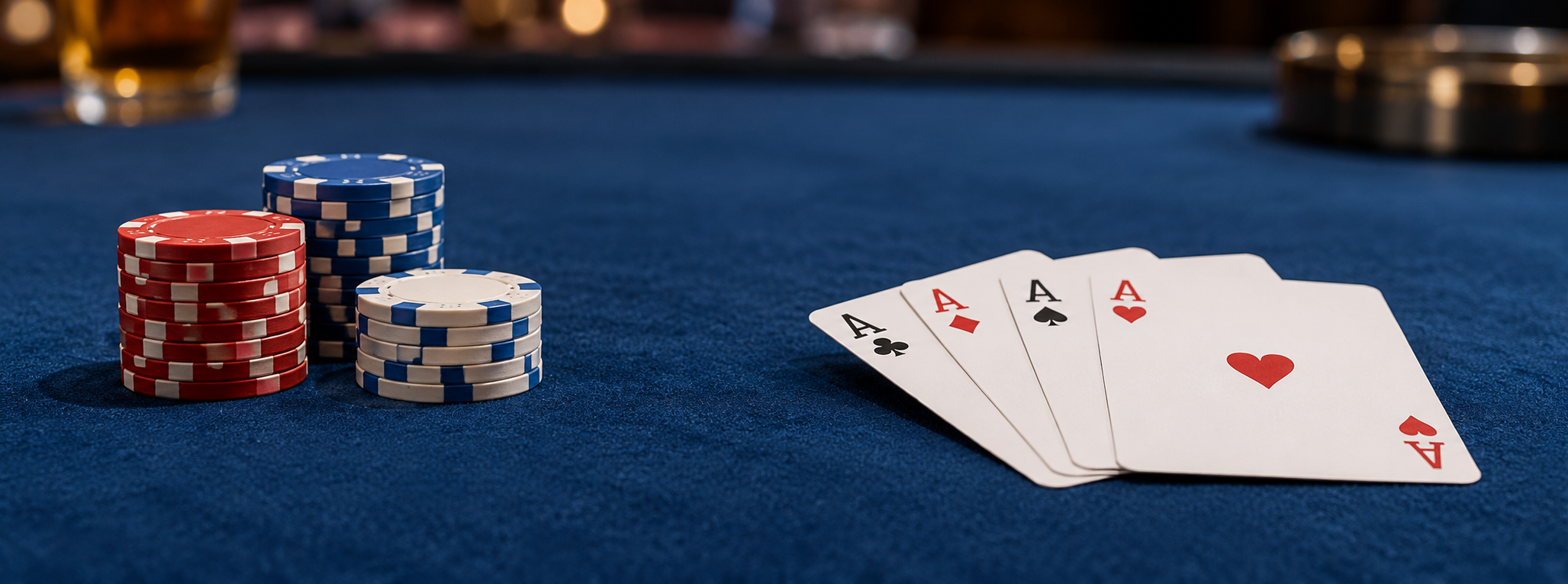
The blue tabletop photograph beside this article offers a useful bridge between the two forms. The cards and chips are ordinary physical objects, yet their arrangement is carefully composed. A pale card face stands out against dark cloth. Red and white details stop the blue from becoming uniform. Soft light in the distance gives the table a setting without distracting from the objects in front.
Placed near colourful game covers, that quieter image changes the pace of looking. The eye can spend time on a few edges and shadows before moving towards lettering and illustrated characters. The two moods support a broader picture of SpinRio’s casino theme. Its source description contains both the familiar tabletop and the more expansive visual language of slots.
Different ways to hold attention
A person may prefer the steady frame of a table on one occasion and the artwork of an invented scene on another. Such preferences can concern colour, pace or simple familiarity. They do not establish the quality of an outcome. A calm picture and an energetic picture each have their own way of occupying the screen, and either can be appreciated as visual storytelling.
The table leaves room for a small human gesture. The reels leave room for a whole illustrated world. SpinRio’s pairing of live casino and slots makes those two forms a natural subject for comparison. This independent feature draws its brand context from the published SpinRio listing; it does not describe connected play, deposits or a tested service. 18+; T&C apply.